The Psychology of Web Design: How Colours Increase Conversions
Choosing your brand colours based purely on 'what looks pretty' is a costly mistake. Colour is a psychological tool that manipulates behavior.
Norvare Team
April 3, 2026
The Psychology of Web Design: How Colours Increase Conversions
When unguided founders attempt to design their own digital storefronts, the most common and financially detrimental mistake is selecting a brand color palette based entirely on personal aesthetic preference.
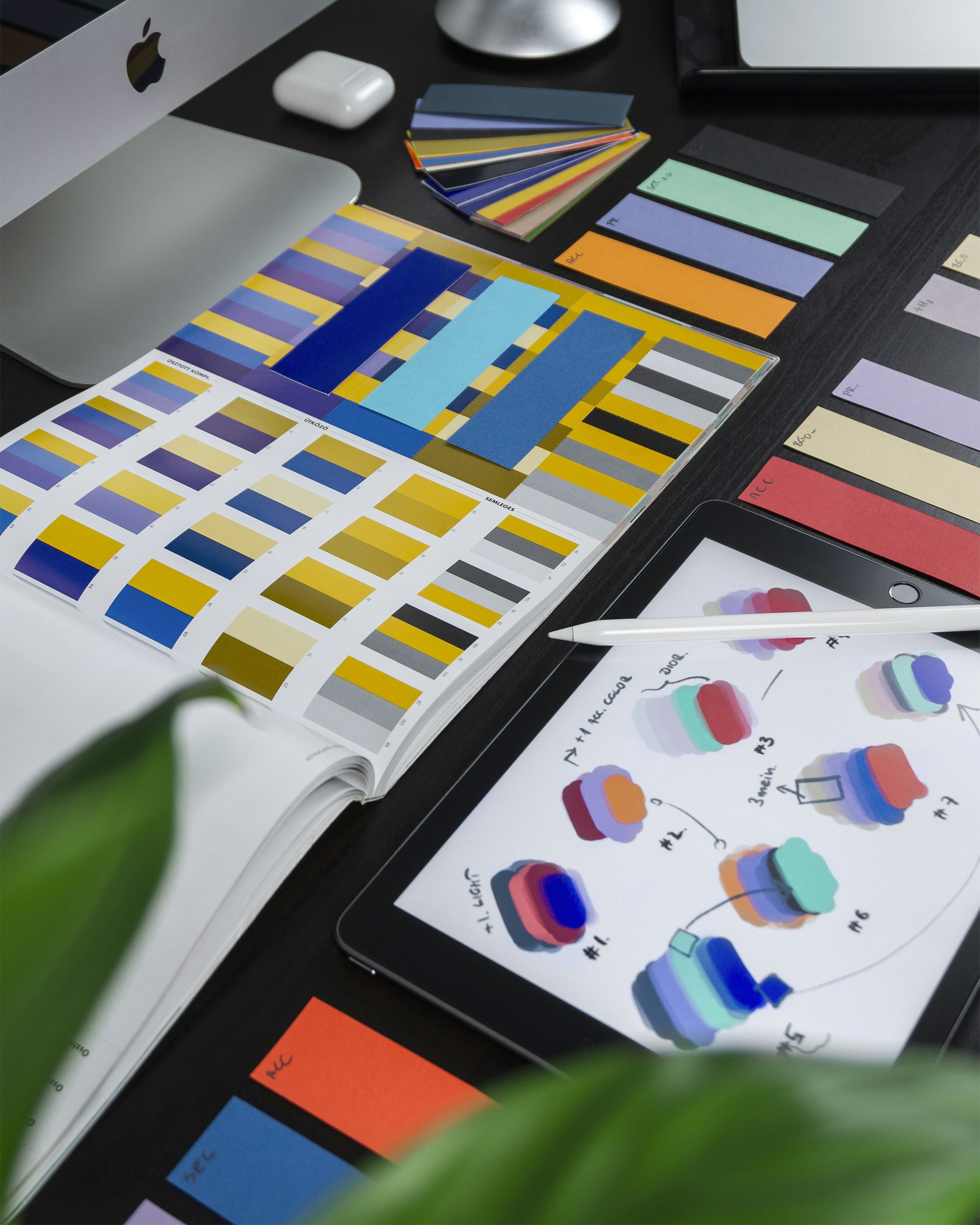
In high-performance digital design, color is emphatically not mere decoration. It is a highly potent psychological manipulation tool. The specific wavelengths of light hitting a user's retina trigger deeply ingrained, subconscious emotional and biological responses. These primitive reactions subtly dictate whether a visitor intuitively trusts your software, whether they feel an artificial sense of urgency, and crucially, whether they ultimately click the primary checkout button.
Decoding Subconscious Associations
Blue: The Foundation of Corporate Trust
There is a mathematically rigorous reason why Facebook, LinkedIn, Stripe, IBM, and virtually every major commercial banking institution on earth utilize distinct shades of blue as their primary brand anchor. Blue universally triggers profound psychological feelings of absolute security, stability, tranquility, and intellectual safety. If you are handling sensitive medical data, legal services, or complex financial transactions, blue is the overwhelmingly safest structural choice.
Red: Urgency and Appetite
Red behaves differently; it physically impacts biology. It has been shown to temporarily raise the human heart rate. It triggers the ancient 'fight or flight' response, creating an immediate, visceral sense of urgency and forced attention. It is exactly why catastrophic error messages, clearance sales, and notification badges are brilliantly red. Furthermore, it aggressively stimulates appetite (a psychological quirk heavily exploited by fast-food empires). Red should be used sparingly, deployed exclusively when you require immediate, unthinking action.
The Restorff Isolation Effect
Perhaps the most crucial concept in conversion design is the realization that the most important color on your website is not your brand color. It is your Action Color.
According to a proven psychological principle known as the Restorff Effect (or Isolation Effect), the human eye is instantly and helplessly drawn to the single object uniquely standing out from its immediate surroundings. If your website architecture is entirely blue and white, a blue "Buy Now" button will completely camouflage into the background. However, a highly contrasting vibrant orange or bright yellow button will fiercely attract the user's wandering eye, naturally increasing conversion click-through rates by up to 35% without altering a single word of copy.
Cultural Context Matters
A highly successful color strategy in one hemisphere can be disastrous in another. While stark white represents pristine purity and extreme modern minimalism in Western cultures, it fundamentally represents death and mourning in several Eastern cultures.
At Norvare, we never choose colors randomly. We engineer digital interfaces utilizing rigorously tested, data-backed psychological design systems to ensure every pixel pushes the user gracefully toward conversion.